If you are a nature lover, and you want to explore one of the best natural ecosystems for bird-watching in their natural habitat in India, Keoladeo National Park would be nothing short of your dream destination! Situated in Bharatpur district (called the gateway of Rajasthan), I had heard of it during preparation for Civil Services Exam, as a well-known Ramsar site, a UNESCO World Heritage Site and a National Park, so there had to be something special about this place to earn so many sobriquets. So, off I went to witness this amazing place, which is famous as the birders’ paradise, especially in the winter season when hundreds of different bird species come for seasonal migration to India from different parts of the world, especially Siberia.
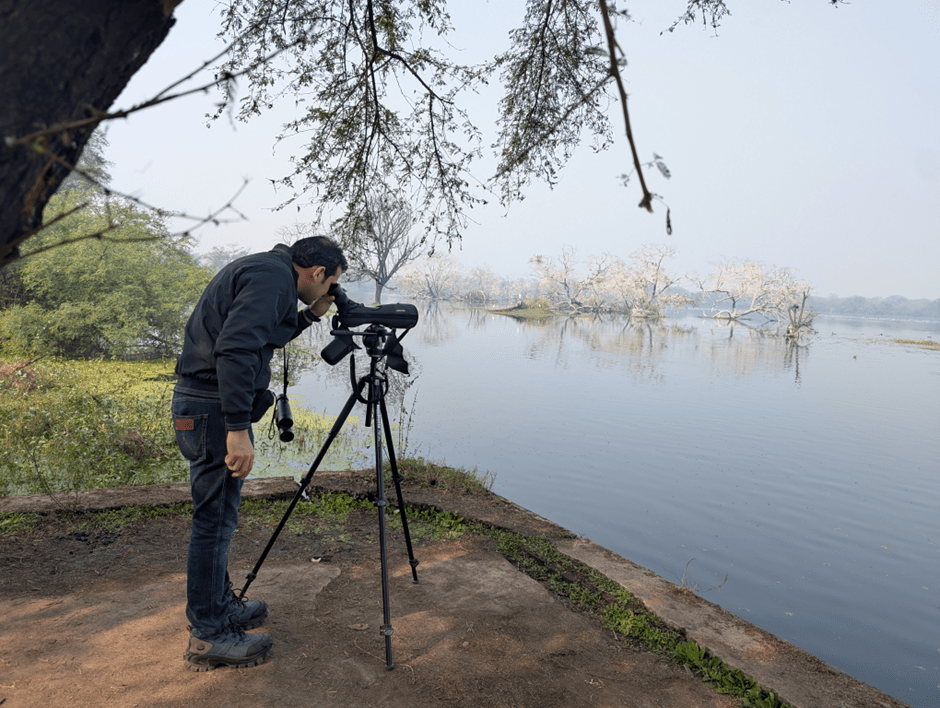
On the day of exploration in the early morning, I happened to message my good friend Shaswat, who gave me nice tips on how to explore the National Park and shared the contact number of some amazing guides. I got in touch with one of them who connected me to another guide with a “Swarovski telescope”! When I heard about the telescope (basically a spotting scope) on call, it sounded pretty exciting. So, the exploration started in the cold foggy morning when I reached the gate of the Keoladeo, where I met Mr. Rajveer Singh, my guide for the day. He was dressed professionally, well-quipped with spotting scope, binoculars, hat, and a bagpack. So, my first impression of him was that it is going to be a great time. As soon as we started, I came to know about the wealth of knowledge that Mr. Rajveer Singh possessed. He hit off with his spotting scope (worth Rs. 5 lakhs) and such a keen eye for spotting birds, that he immediately turned me to one white-throated kingfisher near the entrance of the park. Later, as we talked I got to know that he also works for National Geographic channel and goes around almost all major national parks in India. He had experience of more than 30 years in ornithology, pretty astonishing for a local man with humble roots in the village of Bharatpur.
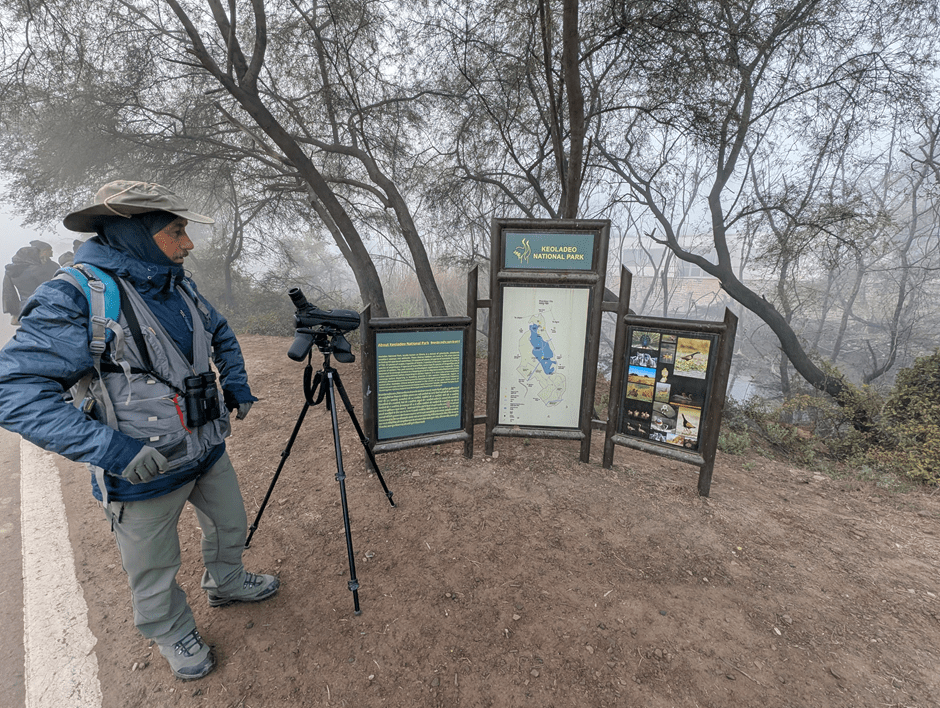
Mr. Rajveer Singh with his priced possession- The Swarovski spotting scope
It was like he smelled birds, he heard and recognized their voice, he knew the habitat well, the trees on which they will come, etc etc. He saw the birds with his naked eye from a long distance, when I couldn’t even trace out where the bird is. Then, he zoomed in on to the bird with his spotting scope and asked me to have a look.
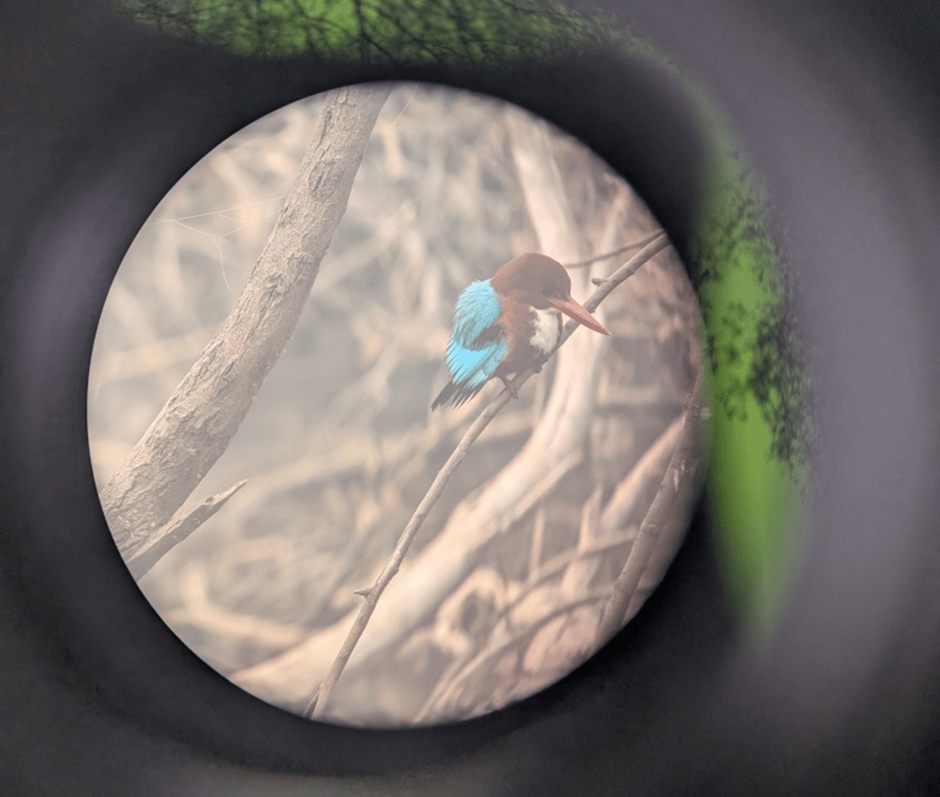
White-throated kingfisher in spotting scope
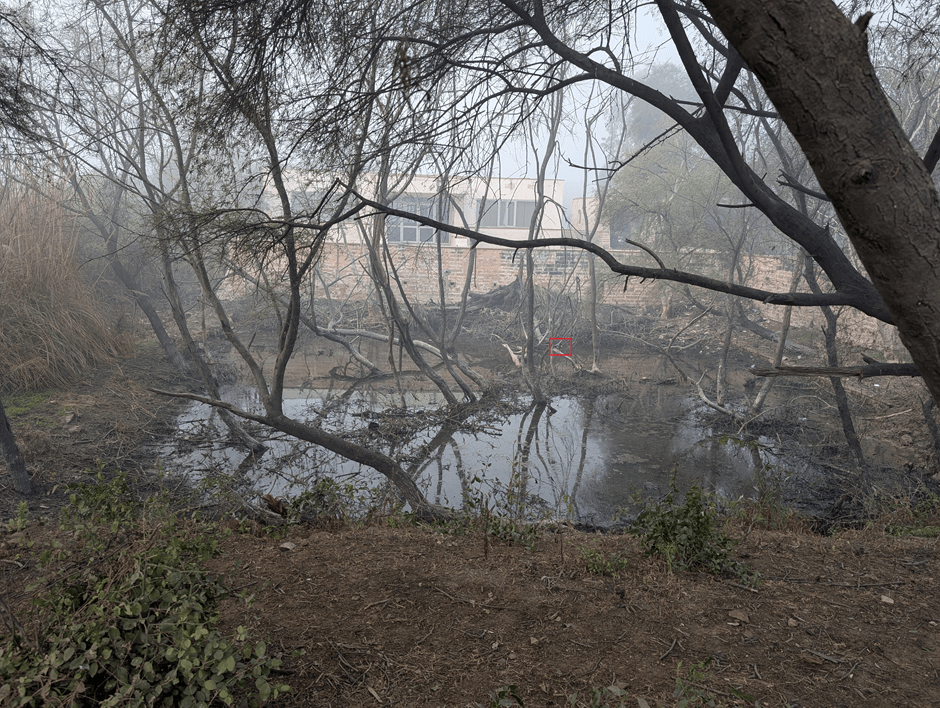
White-throated kingfisher with naked eye (I have made a small red box jahan baithi hai, zoom in to see faint blue and brown colour)

Setting the spotting scope for me
As soon as I leaned onto the spotting scope, he would tell me look into the eyes of the bird- they are red, now look onto its feathers and would go on to describe it so beautifully like its colours, patterns, how to differentiate between male and female, its legs and toes, its beak, peculiar behaviour of that bird, which country it came from, what does it eat etc etc. He knew so much about a single species that he could give one full lecture on one species. And he opened his ebird app as we walked through and started to update the sighting of a particular species and its numbers. This App he told was monitored in real time by international bird conservationists. Infact, he got some queries also from these experts during our 4.5 hours walking tour across the national park, to verify “how could he see 120 number of one particular species, which was pretty high for this area”!
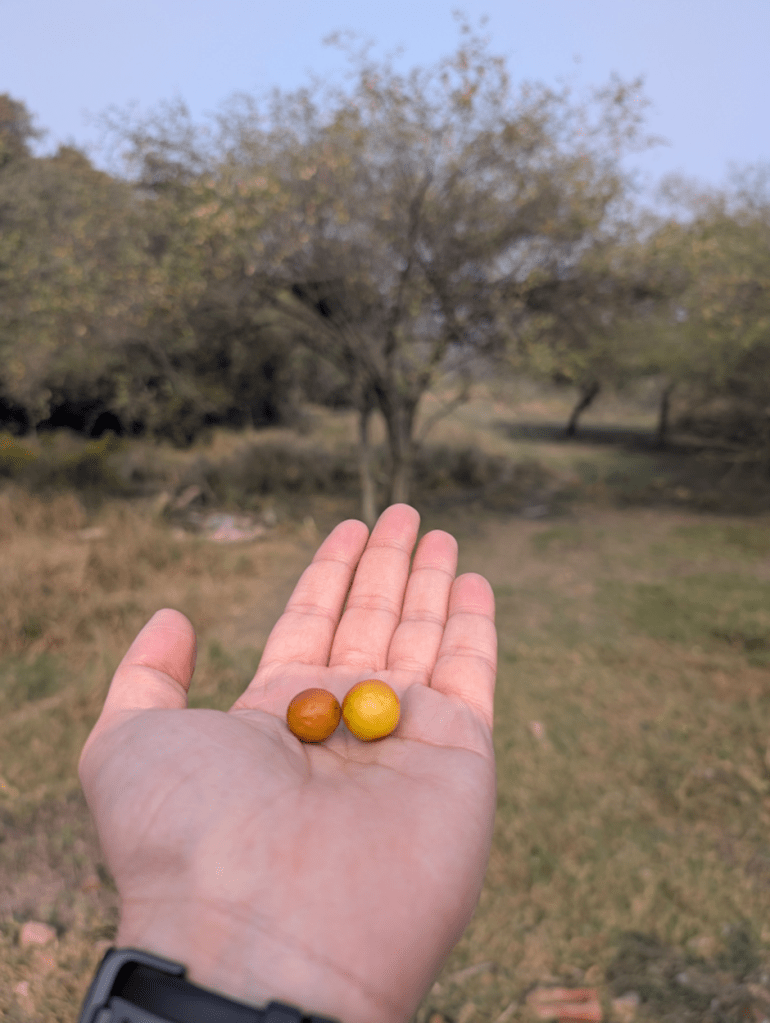
Mr. Rajveer also seemed a local hero, as he knew the other guides and cracked jokes with them as we crossed them. He screamed “Harry” to his friend, whose actual name was Harish Kumar Singh. The guides adopt firangi names also, as there are many foreigner tourists who visit the national park. Mr. Rajveer was just “Raj” for them. He then told me to watch the monkeys and that he would make them dance. So, he pointed a laser onto a monkey, and he jumped like crazy and ran off, as if someone pointed a gun onto him. Then, he showed me the बेर tree, which were eaten by the birds. I desired to eat them, so he went on to pluck a few for me.
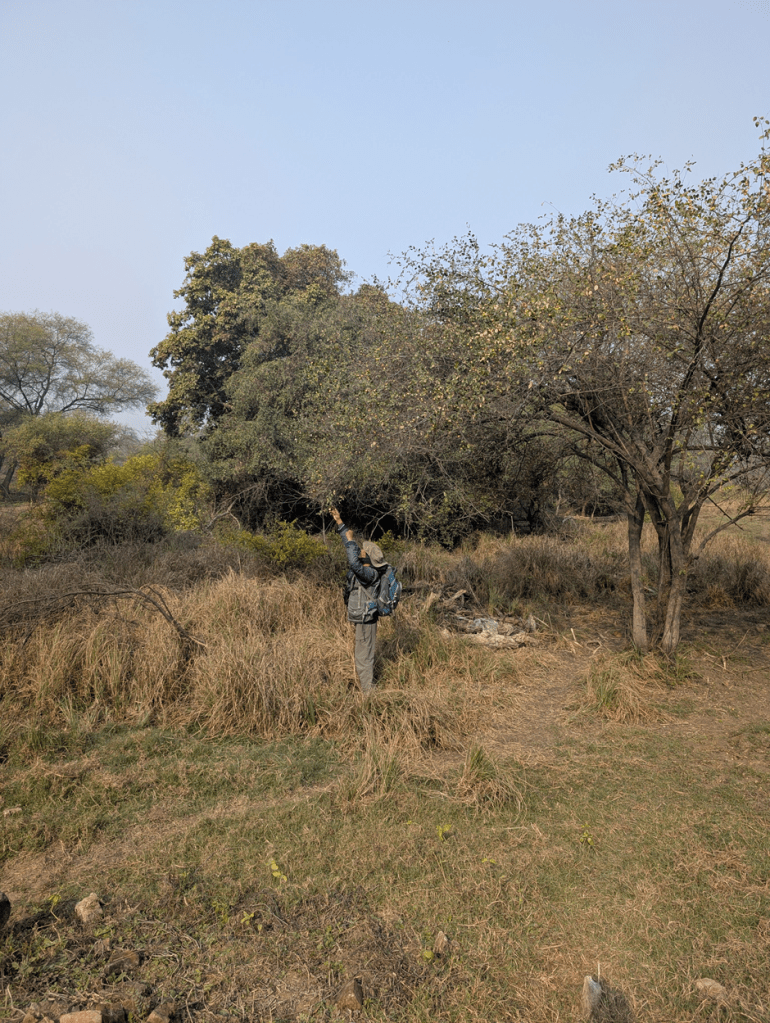
Plucking the बेर
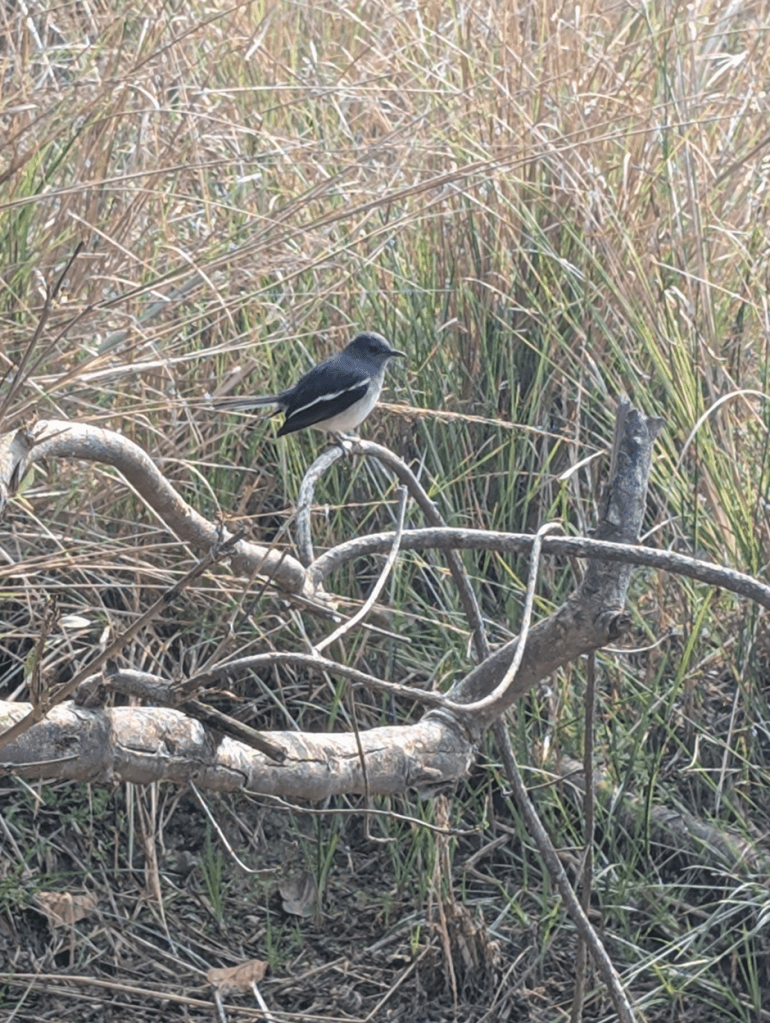
Oriental magpie-robin
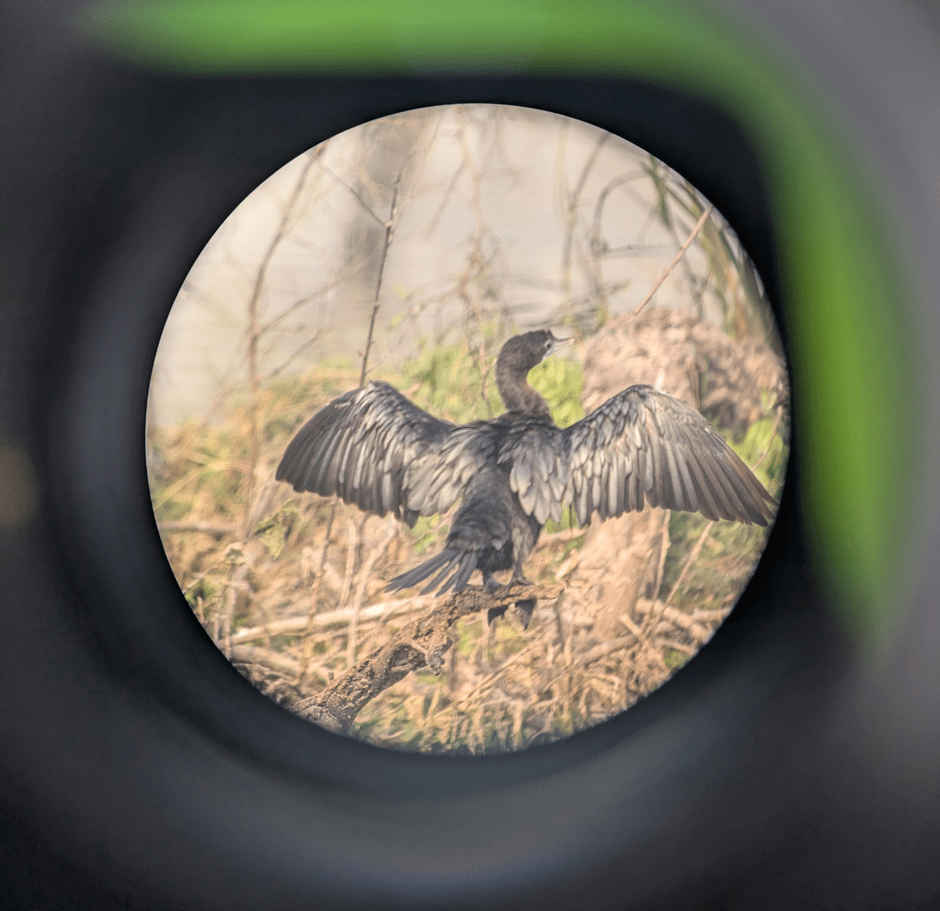
The little cormorant drying its wings as it lacks the oily feathers (nature’s way of balancing the ecosystem, otherwise it could dive in water and eat all the fishes)
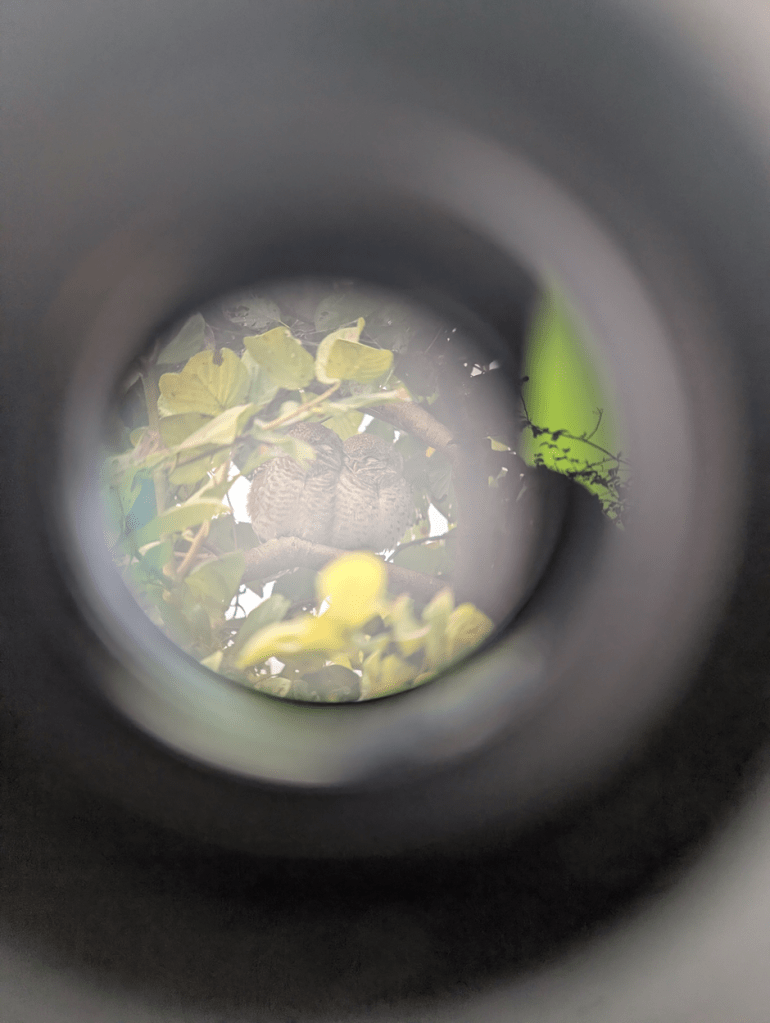

The spotted deer relishing the “ber”
It was a rejuvenating experience to learn about the habitat of particular birds, their behavioural patterns, their food habits, their breeding and migratory season, etc. You could get bored by asking questions about a bird, but Mr. Raj would never get bored answering all of them with ease. He could spot on some birds with a naked eye so well from a huge distance, which was unimaginable for me. Sometimes, I could hardly make out that there is “some bird” sitting on the branch of a tree, but he recognized from that distance about which bird it was. When you have such an amazing guide, then what more can you ask for! If not for him, I couldn’t have enjoyed even 5% of the national park, its over 350 species of birds, its fauna and flora.
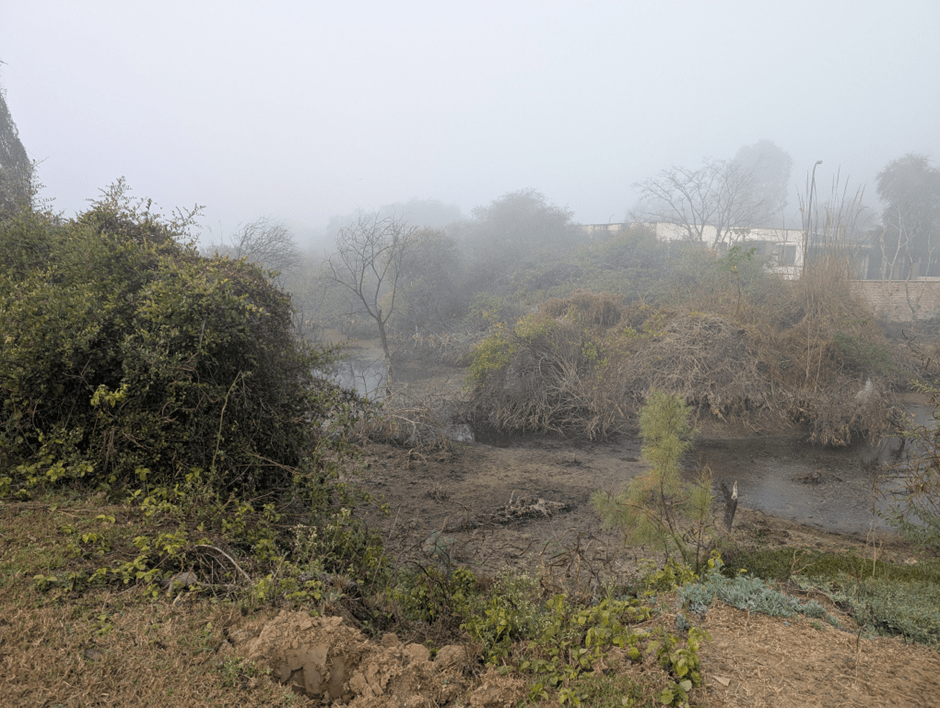
The wetland ecosystem that provides food and shelter for the birds
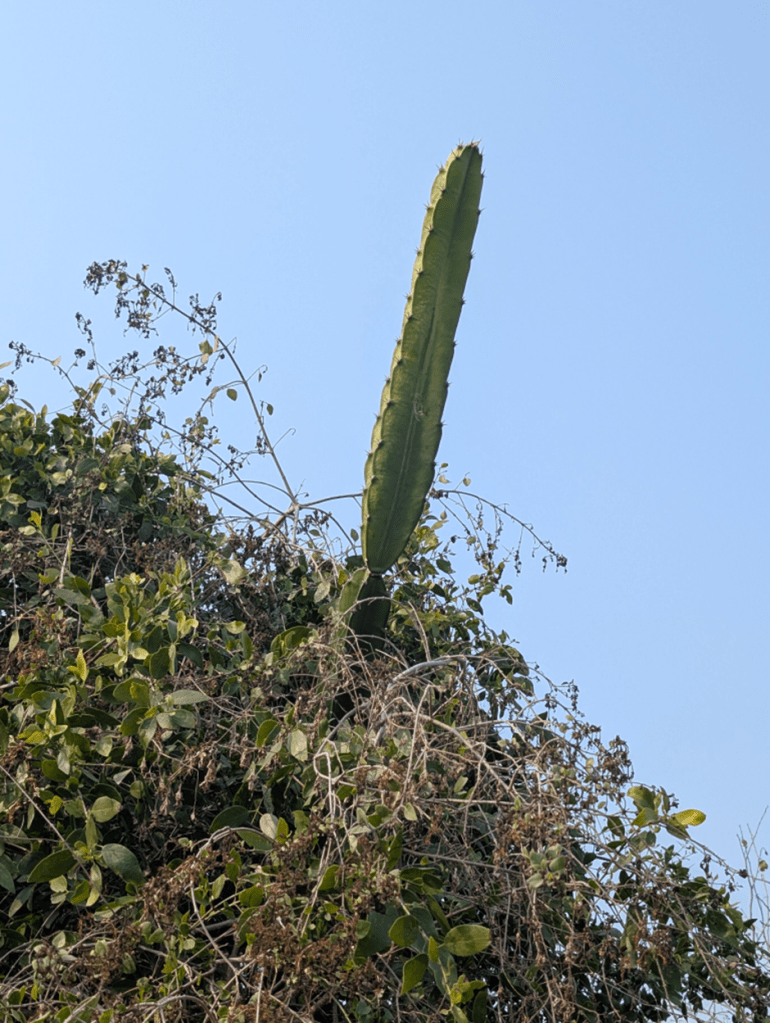
The cactus
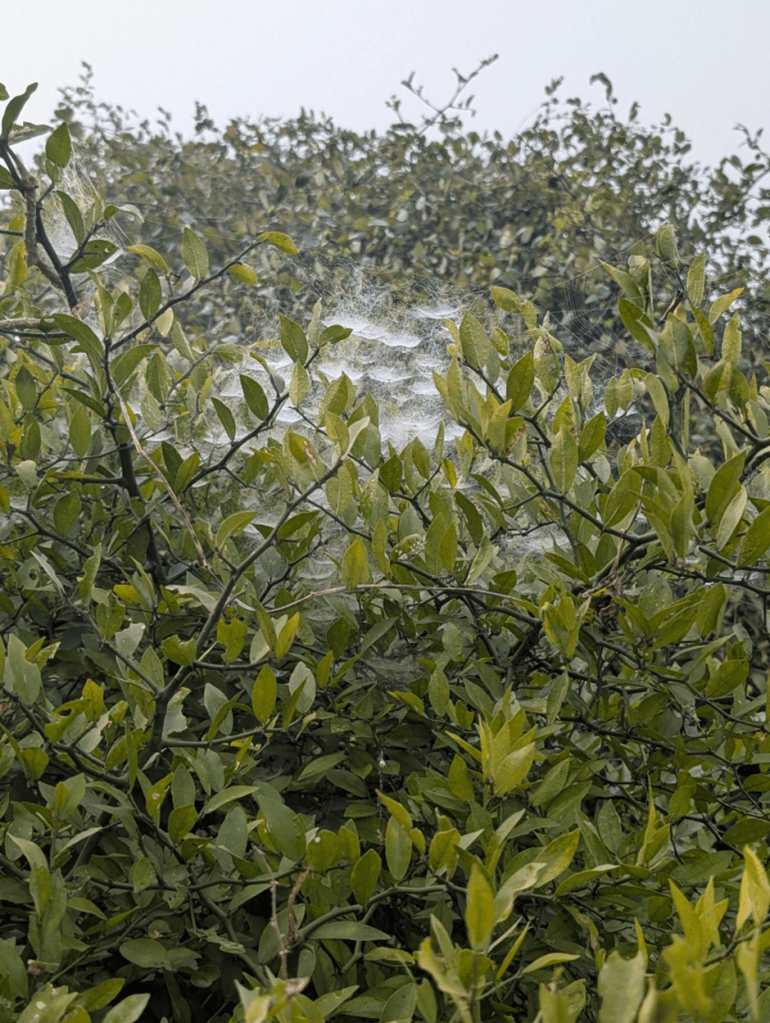
The spider webs to trap insects
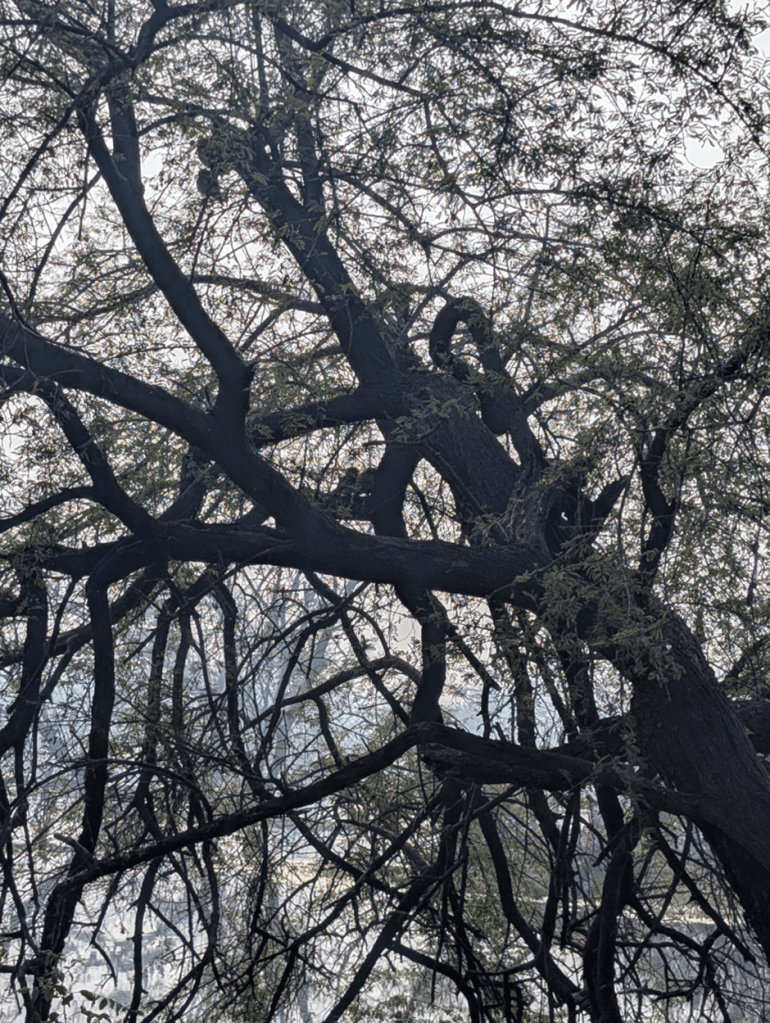
The ubiquitous babool trees- spot the ullu!
We saw different types of dry deciduous vegetation, different medicinal plants, babool trees, ber trees, some trees with a bizarre Latin name, grasses etc. He also told about the snakes, reptiles, butterflies in the region. Shoot him a question, and pat came the reply! We saw white orange tip butterflies, tiger butterflies (he told there are 3-4 types of tiger butterflies). And I thought, there is so much diversity in the nature, and we know so very little about them.
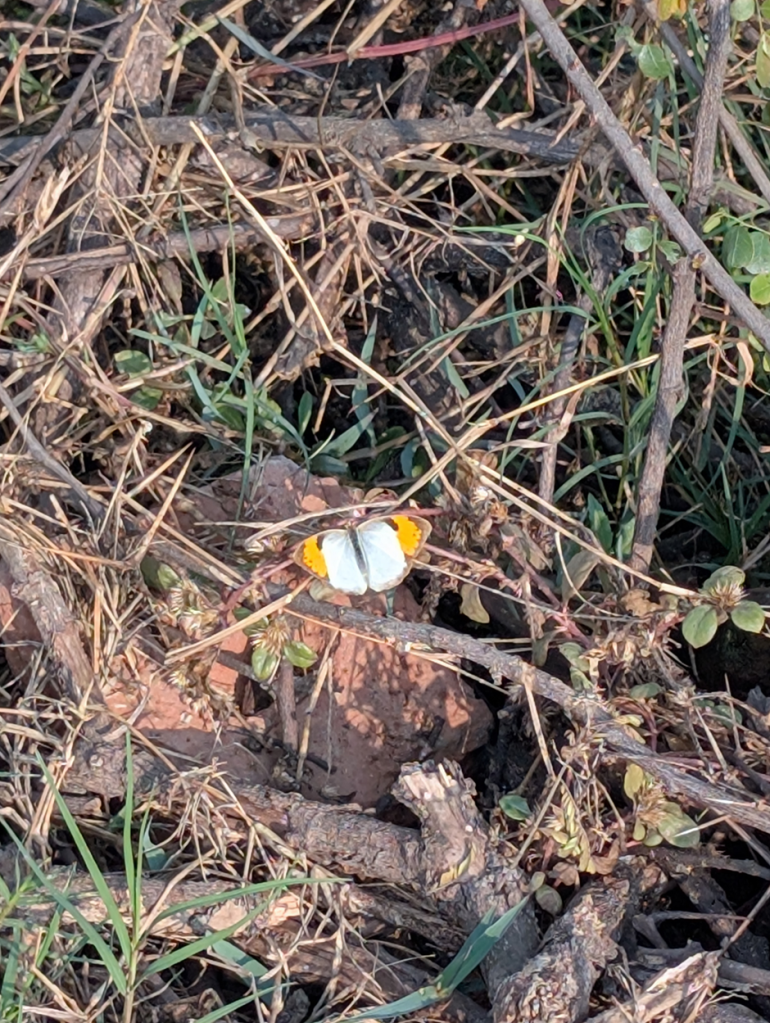
White orange tip butterfly
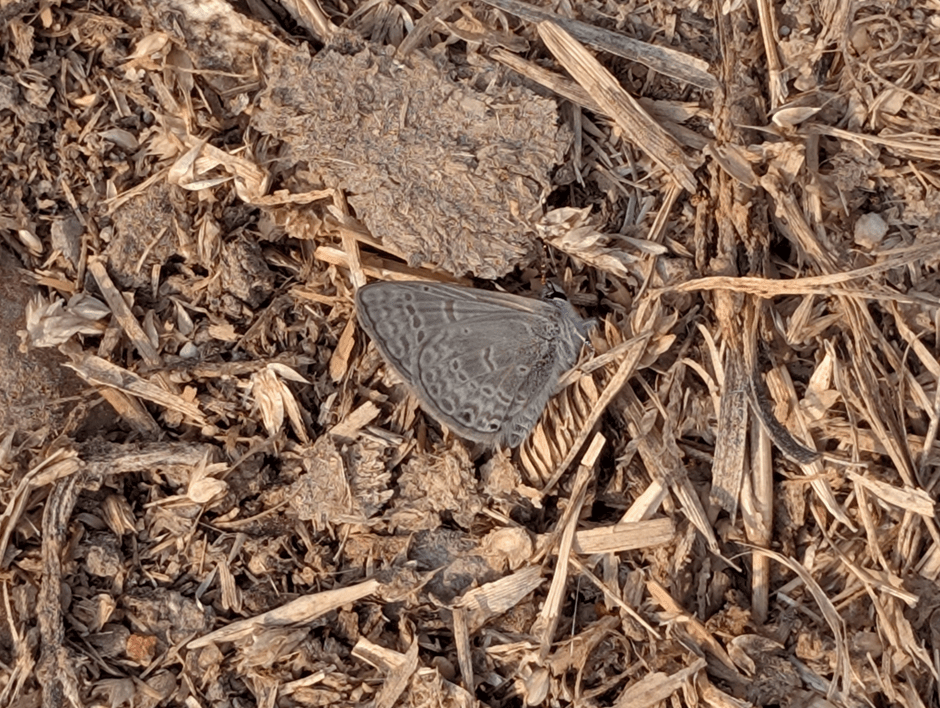
Ek “neeli kaali” butterfly
Then, Mr. Raj told me to look into spotting scope and see the hump of a turtle! A turtle! How could he spot that! It was like a stone or a rock, but years of experience guided him to see such rare things as well. He told me about more than 40-50 bird species during the tour. And in very much detail about the painted storks, sarus crane, snakebird, different types of herons, snakebird, little cormorant , jungle babler. He described the birds in such a beautiful way that you cannot help but fall in love with that bird. For example, look at this bird:
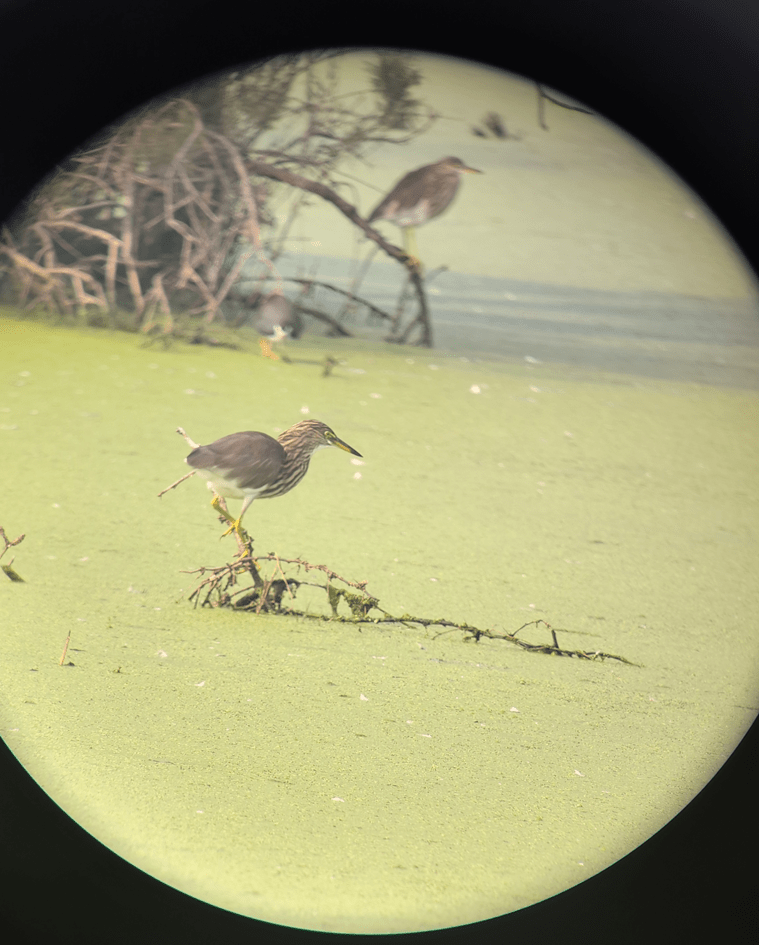
Indian pond heron with eyes locked onto prey
He told me to look into its eyes- yellow circle, then its pointed beak to catch fishes, then its trademark yellow feet, then to the pattern of feather on its head and the lines. He described a bird like a beautiful story.
Then, look at how this painted stork sits, like a knee turned opposite side, basically like our elbow:
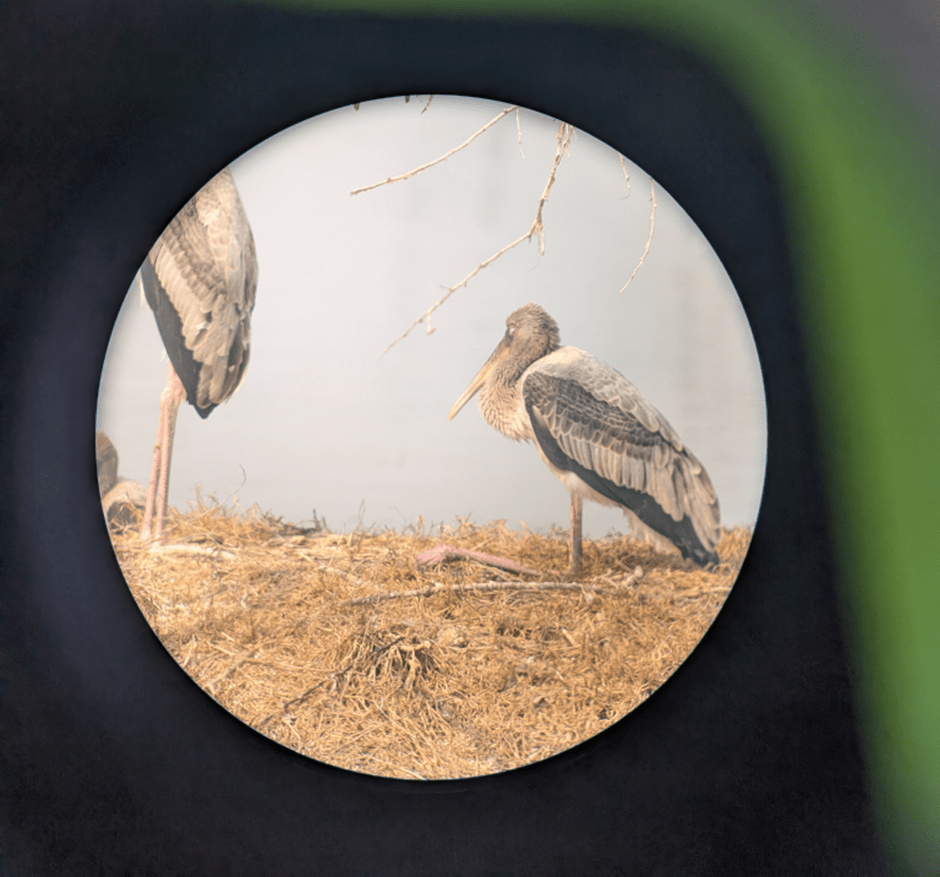
Painted stork with unique sitting pattern
There is so much to explore, learn about fauna and flora and birds and insects, the niche, the migratory pattern of birds (who fly from Siberia, Europe, Central Asia, Himalayas), wetlands, swamps, the leopard and tiger sighting in the area and the list doesn’t stop. You just need a great guide like Mr. Rajveer, tons of patience, a keen eye that doesn’t get tired, an open mind willing to learn, and a heart of a naturalist. Then, you cannot get bored even after spending hours at a stretch and infact when you will walk away then you will find yourself much closer to nature. And somewhere, there will be a realization that humans in the mad race of economic development at “any cost” have done an immeasurable damage to these natural habitats. Now, we hope that keen conservationists like him can help spark love for the nature in the tourists, and create awareness among the people to atleast protect these surviving protected areas and not degrade them further. At one instance, when a little 10 year old child got inquisitive and wanted to look into his spotting scope (who did not pay him by the way), Mr. Raj allowed him to see the birds and quipped to his parents that “Let him see, I am also preparing a future customer 😀 ”. What an amazing encounter it was with Mr. Rajveer in the Keoladeo National Park that I will cherish for lifetime….
 Anupam- The Dreamer
Leave a comment