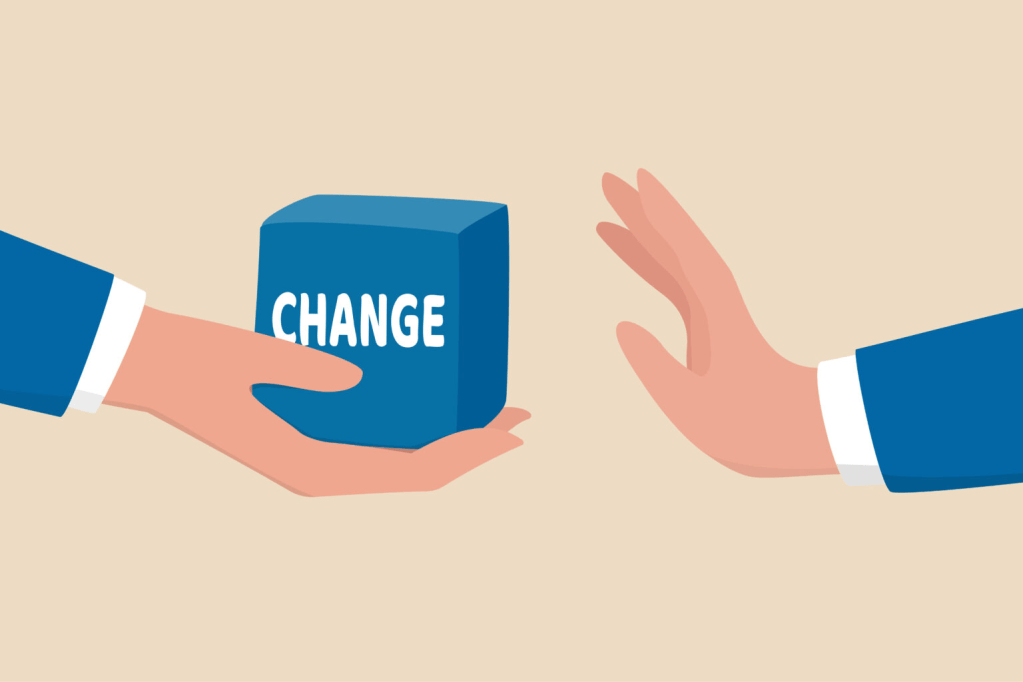
Long-time back I read a book called “Who moved my cheese?” by Dr. Spencer Johnson. It was a short book telling the interesting tale of two mice, Sniff and Scurry, and two “littlepeople” (of the size of mice) Hem and Haw. This tale was about acknowledging that- “Change is the only reality in life that doesn’t change, so better adapt to it”. For many months, I had this quote written on a piece of paper and pasted in front of my study table in my hostel room in the college. I drew inspiration from it that I shouldn’t resist change and instead be always ready to adopt new changes.
We, as human beings, generally don’t like changes in life. Once we get settled to some kind of routine in life, then we silently and sub-consciously we start drawing comfort from that kind of life. For example, if you are in some good job, then chances are that you don’t want a change in roles and responsibilities, or any sort of change, because you have got “used to” that kind of routine. Change is hard, majority of the times, at least in the beginning! There is an inbuilt internal resistance to change. So, unless one gets forced from outside (by other person or agency), the general tendency is to let things move in their usual pace. And this is the biggest impediment for reforms!
We need big jolts to our life for us to recognize the need for reforms! Like independence from colonial rule was a big change. The good part in that change of power from foreign rulers to our own people was that it was brought out internally! The need for reforms was felt not from outside, but by our own forefathers and freedom fighters, who then drafted a great Constitution for governance of the country. They were great leaders who embraced change from within and were guided by an altruistic spirit to better the lives of Indian people. But, after that big jolt, the pace of change and reform has not witnessed the same sense of alacrity and enthusiasm, as it did just after the independence. We have sort of adopted a laid back approach to changes in our governance structure, institutions and processes. We didn’t like changes until it was forced upon us from outside.
The classic example of the change forced from outside is the- LPG reforms of the 1990s. As a country, when we didn’t reform our public sector undertakings and didn’t encourage enterprise and initiative-taking and the regime of licence-permit-quota-raj was reigning supreme, we slowly and steadily were relegated to the position where we couldn’t resist reforms anymore! The nation didn’t have even forex reserves for more than 2 weeks! At that point of time, whether we liked it or not, we “had to” adopt change! Initially there would have been a lot of resistance from inside the bureaucracy, public sector and vested interests, but hardly could they do anything to block the irresistible reforms! And now, we see, that those LPG reforms were only good for the nation, as it saved us from sovereign debt crisis and propelled Indian economy to a higher rate of growth trajectory, away from the “Hindu rate of growth”.
But now, after about 3 decades of the profound reforms in our economy, the pace of internal reforms has again slowed down. As the legendary TSR Subramanian has written in his book “GovernMint in India” that the institutions in our democracy have generally not adopted reforms from within! There is a great inbuilt resistance to reform, whether by executive, or legislature, or by judiciary. The vested interests have more or less become successful in inhibiting any major reforms in any domain of governance. Whatever, big changes have been brought in, are either driven by the public pressure or by external agencies. For example, enactment of RTI Act, was a reform that was brought due to years of sustained pressure from the civil society and general public. Can you name a few other laws that were enacted due to pressure of people i.e. outside the direct power circles? I bet, you cannot name even in double-digits! Some laws had to be passed to align with the international norms like Money Laundering Act, etc. There is a general tendency to delay reforms from within, lest it could shake the existing power structures!
But, as I mentioned above about the book “Who moved my cheese?”- “Change is the only reality in life that doesn’t change, so better adapt to it”. Change will come, it has to come, it is just a matter of time when? And there are two ways- One, either anticipate change and adapt to it, so that you will be better placed when the change actually comes; Two- Don’t do anything now and relax, and you will be shaken to your core when the change actually comes! The choice is yours!
Till next time….
Footnotes:
When change comes, what will be the outcome? It is determined by “Systems approach”, you can read more about it here:


Leave a Reply