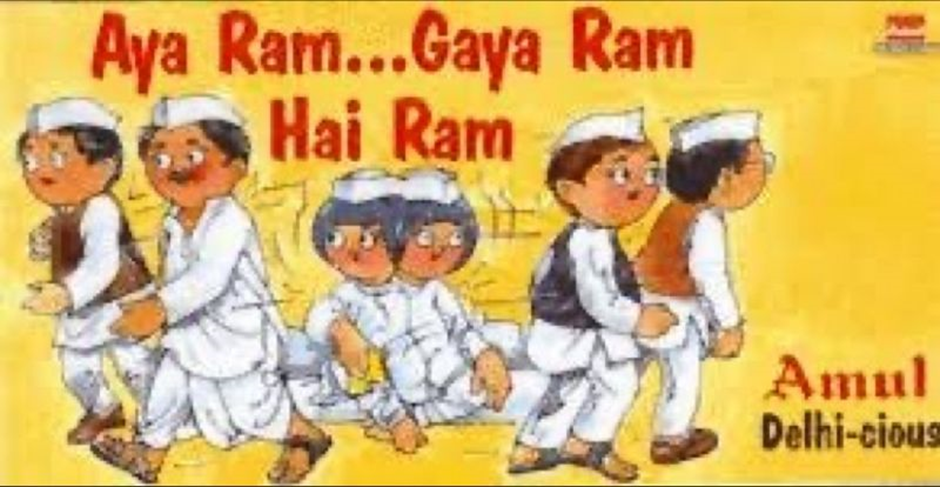
There is a very fragile connection that connects a citizen to the democratic political system. It is the right to vote for his/her own government! It is the trust embodied in his/her vote that the elected government will act in the interest of the citizen, in particular, and the nation, in general. This trust is the very basis of the “Social contract theory” championed by John Locke, wherein the citizens give up some of their rights to the government which in turn is entrusted to act in the interest of its citizens. So far so good. In theory, everything seems fine.
The candidate in electoral fray makes promises, which again is nothing but a process of demanding trust. In lieu of that promise, the citizen reposes his/her trust in the candidate to work in the best interests of the society. Now, what if the elected representatives do not value this trust reposed in them by the citizens and instead start acting in their own interest or some vested interest? It will bring down the whole edifice of promises and the trust. The citizen will start losing interest in the “value of vote” because all he/she witnesses is a constant “breach of trust”. Slowly and steadily, the process of voting, which is infact one of the most important exercise in democracy, will turn into a mere formality! Because what is a democracy sans the trust? It is a nothing but a NULLITY!
Now, take another example. If a candidate is elected on the ticket of one political party, it means that the voter has either given the vote to the candidate or the political party or both. As the candidature is intricately linked to the party, so the trust that the voter is reposing lies in both of them. This is the arrangement that is promised to the voter before the election. But, suppose after winning the election, the candidate changes the political party or affiliation, then does he/she still retain the “moral right” to keep the promise that he made to the citizen? When the basic foundation on which the original promise was made, crumbles, then will the superstructure continue to maintain the same sanctity as before? Procedurally it may be correct, but morally? Is this the constitutional morality that we read about?
TSR Subramanian laments in his book that the Constitution-makers in their bonafide belief on the human nature did not institute adequate checks and balances in the Constitution unlike the American Constitution, as they believed that the people who would run it will be morally like them. The system of checks and balances to curb immoral defections was brought into the Constitution later through 52nd Constitutional Amendment (1985) by incorporating anti-defection law in Tenth Schedule. But, this had the effect of curbing “retail defections” while still protecting “wholesale defections”! It simply means that a single candidate is not allowed to switch affiliations, while the same is allowed at the mass scale. I leave it to your wisdom to judge whether “wholesale defections” violate the trust reposed by the voters through their votes or not….
Till next time….
 Anupam- The Dreamer
Leave a comment